

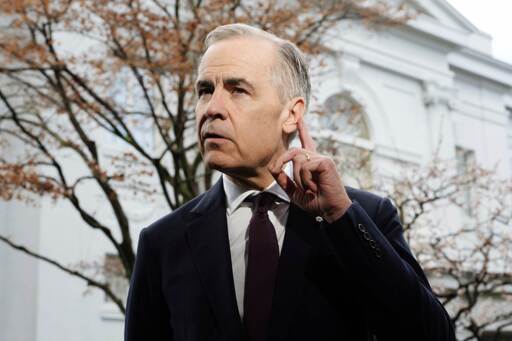
Weeks after it was delivered, Prime Minister Mark Carney’s Davos speech is still generating ripples—quoted in think tanks, parsed in Ottawa, and invoked as shorthand for a world tilting away from frictionless globalization.
“We knew,” Carney told that room of elites, high in the Alps in January, “the story of the international rules-based order was partially false.” Just because Canada benefited from it, Carney said, didn’t hide the fact that it was unfair. The rules didn’t apply equally to everyone. “The strongest would exempt themselves when convenient,” he said. Power, not principle, set the terms.
Carney’s argument rested on two ideas that sat—still sit—uneasily together. On the one hand, he spoke of sovereignty, of the need for Canada to secure its supply chains, deepen its industrial capacity, and reduce its exposure to geopolitical shock. On the other, he reaffirmed a faith in the very global systems whose unravelling has made sovereignty newly urgent: open capital flows, integrated markets, and rules-based co-operation led by familiar powers.
The contradiction was not rhetorical; it was structural. Davos itself is built on the promise that global integration can be managed, even as the world that gathers there is busily preparing for its limits. Carney’s speech captured that paradox perfectly. He offered a vision of Canadian independence that still depends, in many ways, on a global system stable enough to respect independence—the very thing he said is eroding.
This has existed since at least the 1800s, and the managerial crisis in a big way. It just feels more acute with apps, but it is still just policy without accountability. I recommend the Unaccountability Machine for further reading.
We also know what the solution is. We’ve always known. You know it in your heart right now. The solution is localisation and community building. But that comes with comfort costs that we have decided are to much to bear. It comes with inequality between communities that we refuse to tax though land value instead of property value. It comes with risk sharing with others. It comes with comparing yourself, your family, your community, and your nation not to others; but to ourselves 1, 5, 10, 100 years ago.