Hello fellow candidates for mayor and deputy mayor across Grey County,
I am writing to share an affordable housing proposal that each of us can use in our campaigns and, hopefully, work together to implement after the election.
Over the last term, Grey County strengthened its common County-wide framework for rural and agricultural planning, including through Official Plan Amendment 23. This gives the next County Council an opportunity to create one clear pathway for Affordable Rural Communities instead of developing separate approaches across nine municipalities.
Conventional housing construction has become unaffordable for much of Grey County. A modest 150-square-metre conventional house can cost about $383,000 to construct before land, wells, septic systems, roads, permits, development charges, and financing are added. At 5.5 per cent over 25 years, the building alone would cost roughly $2,355 per month and require a household income above $72,500, even before property taxes and heating. By comparison, Owen Sound’s median household income was about $63,000 at the last census, while a one-person household had a median income of about $34,000.
Approving more conventional detached houses may increase supply at the expensive end of the market, but it does little for people who lack access to a mortgage large enough to cover the building itself. We need homes designed around what local people can actually afford.
Housing security also requires more than four walls. OSHaRE reports that most families using its Family Assistance Meal Program are working families. After paying for housing, transportation, and other essential costs, many have little money left for food.
The growth in demand is striking. OSHaRE served 146,625 meals in 2023, more than 212,000 in 2024, and 327,905 in 2025. Its Family Assistance Meal Program began with only 12 families and had grown to more than 340 families by the end of 2025.
Housing that consumes nearly all household income can therefore leave the underlying cycle of poverty in place. Genuinely affordable housing should give people enough financial room, along with access to gardens, greenhouses, orchards, and firewood, to feed and support their families.
Grey County already has a useful precedent. During this term, Grey County approved the County Official Plan amendment for the proposed Thornbury Acres residential farm co-operative in The Blue Mountains.
The proposal demonstrates that County policy can recognize housing, agriculture, shared facilities, and common land together while preserving the property as an intact parcel rather than dividing it through severances.
Its limitation is that it still relies upon conventional detached suburban-style houses. The remaining local planning and condominium process has also required a lengthy site-specific process, with expenses and delays that would make the model difficult for ordinary families, farmers, and small co-operatives to reproduce.
Affordable Rural Communities would build on this County-level precedent through a simpler pathway focused directly on affordability.
A practical example is a 9.1-metre-diameter insulated family yurt providing about 65.6 square metres of private living space. This would be a permanent four-season dwelling targeting building-code-level thermal performance, rather than a lightly insulated camping yurt.
The working design includes a reinforced frame, approximately R-20 fibreglass wall insulation, approximately R-40 roof insulation, an insulated platform, and masonry heating. With a composting toilet, sink, shower, and drinking-water system, its central estimated cost is approximately $56,000.
For a single adult, adding one hectare of marginal Grey County land brings the combined capital cost to approximately $91,000. Financed over 25 years at a planning assumption of 5.5 per cent, that represents about $560 per month. A sustainable co-operative or community-land-trust lease would be roughly $700 per month, plus electricity and firewood.
For a couple or household with two adults, the same yurt with two hectares of land has a central capital cost of approximately $126,000. The corresponding capital payment is about $774 per month, while a sustainable cost-recovery lease would be approximately $900 to $1,050 per month.
Owen Sound provides a useful local income benchmark. Its median household income was about $63,000 at the last census, while the median income for a one-person household was about $34,000. These working examples demonstrate that a comfortable four-season home with productive land can fit the incomes of ordinary local households.
An existing farmhouse could serve as the amenity building, providing a larger kitchen, laundry, guest rooms, food-processing and storage space, gathering space, and a workshop. This would make better use of a building and infrastructure already on the property while allowing private dwellings to remain simple and affordable.
The central principle is that the rural property remains intact.
New homes would generally remain within the existing farmstead or a one-to-two-hectare building envelope. A guideline of approximately 250 square metres per household could provide room for the dwelling and immediate private outdoor area, while the great majority of the property remains available for agriculture, gardens, greenhouses, orchards, pasture, forests, firewood, habitat, and rural enterprise.
Keeping the land under one title still allows each household to have genuine ownership, control, equity, and responsibility.
Each household could own an interest in the overall property and receive clearly defined exclusive-use land segments. These could include the home and immediate yard, an annual garden and greenhouse, an area for perennial crops and fruit or nut trees, and a coppice woodlot for renewable firewood.
These household interests could be inherited or transferred with the dwelling while remaining legally tied to the intact parent property. This would prevent separate severance and keep the household’s dwelling and land interests attached to the larger rural property.
It would also avoid many of the conflicts and free-rider problems that arise when every garden, crop, building, and task is managed communally. Each household would receive the benefit of its work on its assigned land.
Shared responsibility could be limited to infrastructure that genuinely benefits from co-operation, such as the internal road, water and sanitation systems, farmhouse amenity building, workshop, food-processing equipment, and larger machinery.
The carrying-capacity guideline would be approximately one hectare per adult. Children would be included within their household’s land allocation, since families already share housing, gardens, greenhouses, food systems, perennial crops, and woodlots.
Consider a farmer and spouse whose two adult children want to remain on the property with their partners and four children. The extended family would include six adults and four children, requiring approximately six hectares of carrying capacity.
Current provincial policy can already permit up to two additional residential units on qualifying farm properties, allowing the first additional family households to remain on the farm.
The proposed policy would create a low-red-tape pathway for further modest dwellings as the family expands, with the total number tied to the adult carrying capacity of the land rather than an arbitrary dwelling cap.
The homes could remain within the existing building envelope. Each household could receive its own dwelling area, garden, greenhouse, perennial planting area, and coppice woodlot elsewhere within the intact property.
The farm would remain one parcel. Fields and forests would remain continuous. Children and grandchildren could help operate the farm, care for older relatives, raise families near one another, and gradually assume responsibility for the land.
The same framework could support unrelated households. A group could purchase land through a co-operative, community land trust, condominium-style structure, or similar arrangement. They could build modest private dwellings around an existing farmhouse, receive distinct household land allocations, and share only the infrastructure that produces genuine savings.
This could give single working people a realistic path to a secure home with land. It could also reduce economic barriers for families who want children by placing grandparents, relatives, and other families nearby, lowering housing and food costs, and allowing additional modest dwellings as families grow.
The wider economic effects could extend far beyond housing.
A County-wide pathway could create steady demand for locally manufactured insulated yurts, modular building components, windows, doors, masonry heaters, wood stoves, greenhouse systems, composting toilets, water systems, furniture, and other materials.
Repeated local production could reduce costs further while creating skilled employment in manufacturing, construction, installation, maintenance, and repair.
More residents with access to productive land would also increase local food production. This could support nurseries, seed growers, equipment manufacturing and repair, mills, bakeries, shared commercial kitchens, canneries, freezers, dehydrators, abattoirs, wood processing, fibre production, and other small-scale industries.
Affordable housing could therefore become the foundation of a broader local import-replacement economy. Residents would gain affordable homes and productive land, while local businesses gained customers, workers, suppliers, and opportunities to manufacture and process more of what Grey County currently imports.
These communities could preserve rural character more effectively than scattered severances. Homes would remain within the existing farmstead instead of spreading along rural roads. Fields, forests, and viewscapes would remain continuous, while fewer entrances, shorter internal roads, and shared infrastructure would reduce costs and physical disruption.
The policy should also reduce red tape.
The Thornbury Acres process showed that the concept can receive County-level planning recognition, but requiring a separate Official Plan amendment, zoning amendment, condominium process, extensive professional studies, and years of uncertainty for every project would prevent it from becoming a broadly affordable solution.
Grey County should establish clear standards for property size, approximately one hectare of carrying capacity per adult, use of the existing building envelope, household land allocations, water and sanitation, emergency access, building safety, and preservation of productive land.
Projects meeting those standards should have a simple, predictable, rules-based approval path. The next County Council can direct staff to prepare the County Official Plan policy and model zoning provisions for municipalities to adopt.
A shared campaign commitment could be:
“I support a County-wide pathway for Affordable Rural Communities that keeps rural properties intact, prevents severances, preserves rural character, and gives people secure homes, distinct household land, gardens, greenhouses, orchards, firewood, family support, and rural livelihoods.”
For candidates in urban communities, a vacant home tax would complement this policy by helping return existing vacant houses to residential use.
The full proposal is available here:
https://helpos.ca/mayor/affordable-rural-communities
Please feel free to use or adapt this proposal in your own campaign. Hopefully enough of us will be elected that the next County Council can pass the framework and begin enabling Affordable Rural Communities throughout Grey County.
Kind regards,
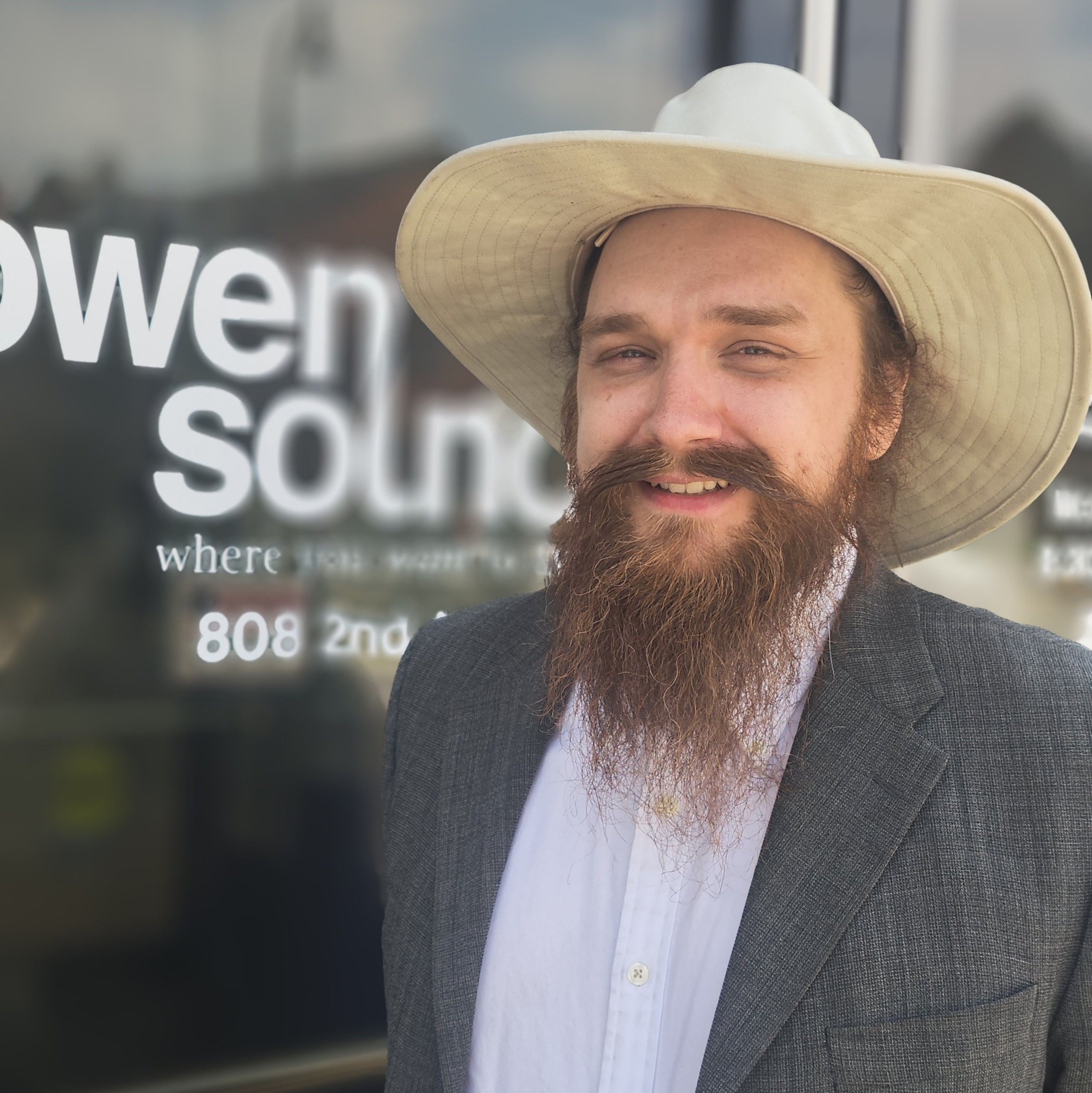
Andrii Zvorygin Candidate for Mayor of Owen Sound mayorofowensound.ca
You must log in or # to comment.