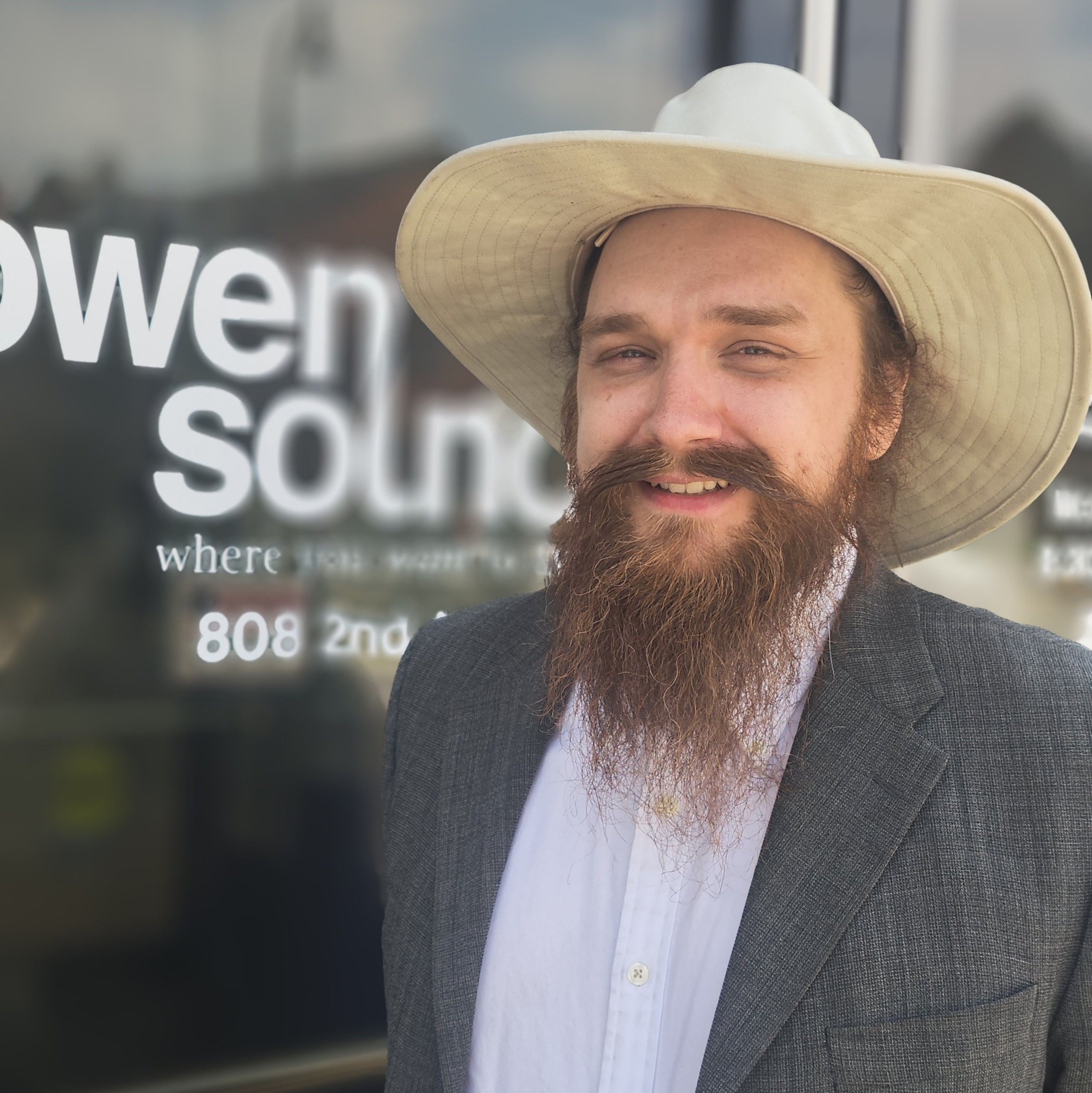
Campaign Update: Certified and Moving Into the Election
It has been quite a whirlwind since my last campaign update about a month ago.
Nominations have now closed, the candidates have been certified, and I am officially on the ballot for Mayor of Owen Sound.
In the weeks leading up to that milestone, I have been canvassing across the city, meeting with candidates and supporters, researching City finances and operations, and continually refining the platform based on what residents have been telling me.
A pattern has emerged: residents raise a concern, I investigate it, publish what I find, develop possible solutions, and take those ideas back to people for further feedback.
That process has changed the campaign considerably over the past month.
Affordable Rural Communities
One of the first major developments was Affordable Rural Communities.
I created candidate email lists and contacted candidates across Grey County with a proposal that we campaign on making Affordable Rural Communities possible and, where voters support us, work together after the election to establish the planning framework needed to allow them.
The concept separates home ownership from land ownership. Residents could own a modest home while leasing productive rural land at a stable cost.
I also shared the proposal in Facebook groups, where it received considerable attention and useful feedback about plumbing, electricity, winter living, land requirements and cost.
That helped substantially improve the proposal.
The current model includes integrated plumbing and solar electricity. A winter-grade 66 m² home with full amenities came out to roughly $61,000, or around $350 per month under the financing assumptions used.
Full calculations and comparisons:
https://helpos.ca/mayor/affordable-rural-communities
Using Grey County rural and agricultural land values, leasing about a hectare came out to roughly $275 per month.
I built a calculator so people can examine the assumptions themselves:
https://andriizvorygin.github.io/living-region/arc-affordability
Some people then questioned how much land a household would actually need, which led me to build an open-source carrying-capacity calculator modelling annual crops, perennial succession, nutrition, wood coppice and household resource requirements:
https://andriizvorygin.github.io/living-region/carrying-capacity
The idea is to make the assumptions visible and auditable so people can explore different household sizes, diets and production systems for themselves.
From my story to a stronger campaign flyer
Around this time, my gardener-story flyer about why I decided to run began circulating widely online:
https://helpos.ca/mayor/assets/flyer/gardener-story.html
The response on Reddit became unexpectedly enthusiastic, occasionally to a rather comical degree. People were discussing the campaign, sharing the flyer and even calling me directly.
Canvassing then showed me that residents also wanted more of the actual platform in their hands.
So I created:
Housing, Taxes and a City that Works Locally
https://helpos.ca/mayor/assets/flyer/housing-taxes-city-works-locally.html
That version received a number of positive comments online and at the door, and I have since distributed many hundreds of copies across Owen Sound.
I later learned something else from both canvassing and the other campaigns.
Council candidate Thomas Arakal, whom I interviewed here:
https://www.youtube.com/watch?v=7yCv76fcvDo
encountered residents who had received campaign material from Carol Merton’s team. He was able to take pictures of her flyer, which gave me additional information for her mayoral candidate profile.
Her flyer also gave me useful ideas about presenting qualifications and straightforward resident-facing results more prominently.
That led to another redesign of my own flagship flyer:
A City That Works for Residents
https://helpos.ca/mayor/assets/flyer/city-that-works-for-residents.html
The new version puts practical outcomes and my preparation for Mayor near the front while retaining substantial policy detail.
Canvassing also helped me understand what residents want to know about the person asking for their trust.
A recurring set of questions, particularly from long-time Owen Sound residents, has been where I come from, my ethnic background, how long I have lived in Ontario, and how long I have lived in Owen Sound.
So I added a short personal introduction near the beginning.
I describe myself as Canadian with Finnic-North Eurasian roots, having lived in Ontario for 33 years and Owen Sound for 11 years.
Canada is the country I grew up in and built my life in. The country where I was born ceased to exist when I was still a child, so describing my nationality as Canadian and my ancestry separately feels clearest to me.
Meetings and Council cooperation
I have also continued holding fairly regular meetings downtown with candidates and supporters.
These meetings have helped build relationships and identify areas where people with different backgrounds and priorities can cooperate.
At one meeting, a retired OPP officer joined us and provided useful information about policing and potential cost savings.
I have also been speaking with candidates about transparency, fiscal responsibility, local representation, housing, community safety and other areas where the next Council may be able to find practical common ground.
Every candidate remains independent.
My goal is a Council where people can disagree respectfully, examine evidence openly, and work together where useful solutions can be found.
Following the debt
Another major line of research began with a City financial release mentioning that Owen Sound paid close to $1 million in interest in 2025.
That raised an obvious question: what exactly are we borrowing money for?
After several weeks of following up with the Clerk, I received a partial breakdown and published the findings here:
https://helpos.ca/c/owen-sound-council/8659/update-on-owen-sounds-286-million-external-debt
The broader debt figure is close to $29 million, with annual debt payments of roughly $3.6 million.
Important questions remain about which debts are funded through property taxes, which through water and wastewater rates, and how each payment divides between principal and interest.
The documents did reveal that roughly $17.19 million of the debt is associated with water and wastewater infrastructure.
That led directly into another major area of research.
A deep dive into wastewater
Several residents had already raised concerns about wastewater capacity, particularly with substantial new housing development proposed.
Residents in the southwest end were especially interested in the issue when I canvassed there.
Two problems stood out in my research.
One is wet-weather inflow and infiltration, where rainwater and groundwater enter the wastewater system and consume treatment capacity.
The other is harmful material entering the sewer system, including solvents capable of damaging infrastructure and increasing costs.
I developed a plan centred on prevention, detection and accountability.
That includes monitoring capable of detecting unusual discharges, collecting samples, tracing likely sources, and recovering costs where a responsible source can be identified.
It also includes proactive education and inspection for higher-risk businesses so materials capable of damaging the wastewater system are handled properly.
I also looked at inflow and infiltration reduction, wastewater energy recovery, treatment capacity and measures for reducing odours around the plant.
The full wastewater plan is here:
https://helpos.ca/mayor/wastewater
It was encouraging to return to residents who raised these concerns and be able to discuss practical solutions.
Property taxes, Jim Hutton’s research and City Hall
Property taxes have been another common concern, particularly in the southwest end.
Then, on August 19, David McLeish published an Owen Sound Current article entitled “Our Town: High Taxes, Low Incomes & Squeeze on Owen Sound Property Owners.”
His comparison found that Owen Sound had the second-lowest median after-tax household income among the municipalities examined, while property taxes consumed about 7% of median after-tax household income for the detached bungalow used in the comparison, the highest proportion among the 28 municipalities studied.
David’s article also gave considerable credit to local resident and budget researcher Jim Hutton, who has spent years examining Owen Sound taxes, spending and staffing.
Jim’s earlier research found City expenses increased from about $40.1 million in 2011 to $54.5 million in 2021 while the city’s population remained essentially flat. He has also published comparative work on staffing levels, salaries and benefits.
Several ideas already in my transparency platform align with Jim’s recommendations, including zero-based budgeting, clearer financial reporting, service-level costing and comparison with similar municipalities.
After David’s article came out, I followed up with Jim again directly.
Jim estimates that a properly reconciled comparison of present City spending with 2011 spending, adjusted for inflation and changes in responsibilities, could potentially identify savings equal to roughly 5–10% of the municipal tax levy.
I think that estimate deserves to be tested carefully.
My approach would be to examine City services systematically, publish the underlying numbers wherever legally possible, establish the service level residents need, and determine what staffing, equipment, contracts and management are required to deliver it efficiently.
More details:
https://helpos.ca/mayor/transparency
My conversations with Jim also pushed me to look more closely at staffing and management.
He has raised staffing costs publicly for years and encouraged me to consider a broader hiring pool for management positions.
That led me to compare Owen Sound’s organizational structure with other municipalities.
I found that Owen Sound City Hall has more management layers than comparable municipalities require, and that a flatter structure can work at our size.
So I developed a proposed three-layer City Hall structure:
Council and the City Manager → Directors → frontline staff
The objective is clearer responsibility, shorter communication paths and directing a greater share of municipal resources toward the services residents receive.
Retention matters here as well. Clearer responsibilities and fewer management layers can make work easier to navigate, while improved retention reduces recurring recruitment, onboarding and training costs.
I would also broaden management recruitment to include strong candidates from the private sector, co-operatives, non-profits and technical fields alongside people with municipal experience.
Compensation and staffing levels should ultimately correspond to the service residents receive.
The detailed City Hall staffing plan is here:
This whole line of work is a good example of cooperation in practice. Residents raised the tax issue at the door. Jim Hutton had already spent years assembling comparative financial evidence. David McLeish connected that work with current income and tax comparisons. I followed up with Jim, researched the organizational structure further, and developed a proposed way forward.
Candidate comparisons and election transparency
I have also continued building HelpOS as an election resource.
The Mayor candidate profiles and comparison are here:
Profiles for the certified Council candidates are here:
I am continuing to add candidates’ experience, priorities, websites and responses as information becomes available.
I think residents should be able to see what every candidate is offering and make their own informed decision.
That is the same transparency principle I want to bring into City government.
Now the candidates are certified
And that brings us to this week.
Nominations have closed, the candidates have been certified, and we now know who will be standing for election.
There are 6 candidates for Mayor, including me, and 21 candidates competing for 7 Council seats.
Scott Greig has been acclaimed as Deputy Mayor, so he will continue representing Owen Sound alongside the next Mayor at Grey County Council.
There are also 2 candidates for the English public school-board trustee seat. I was especially happy to see that race take shape because I had encouraged one of those candidates to consider running.
The English Catholic trustee has also been acclaimed: Suriya Thomas, the wife of Council candidate Thomas Arakal. So their household will have two people stepping into public service in different roles this election.
After months of preparing, researching, building tools, talking with residents and refining the platform, seeing the complete field certified makes the election feel much more tangible.
I will continue canvassing, distributing flyers, meeting residents, speaking with candidates and community groups, and improving the platform as new concerns and better ideas emerge.
That approach will continue after the election if residents choose me as Mayor.
Good government should work much like this campaign increasingly has:
listen, investigate, publish the evidence, develop a solution, listen again, and improve it.
Thank you to everyone who has opened their door, sent information, challenged an assumption, offered an idea, helped distribute material, attended a meeting, or simply taken the time to talk.
Now we know who is running, and the next phase of the election begins.