The maintenance nightmare is the main problem on any long track. Electric trains are fine within a municipality because it is short distances and frequent stops. For a Go train that goes from Barrie to Toronto traditional rail is the only thing that makes sense. We are running out of diesel globally, our total fossil liquids production is on pace to be 60% lower by 2050. With every 5% reduction in oil production prices go up 50%. As you may have noticed it starting with Hormuz. Which is still being mediated by reserve releases
But if Hormuz stays closed for 3-6 months we could see prices rise 200% to $3-4/lt
Do you know the distance between Barrie and Toronto? It’s about 80-100km. Hamilton to Toronto (the most populous corridor)? 60km. As far as train tracks in Canada go that’s pretty short.
Caltrain did it between San Jose and San Francisco (75km) for 2.5 billion USD which is a major capex but their operating cost for fuel and things went down were 20-25% less than initially expected, even if in absolute terms the O&M budget went up, but the service became more frequent, fast, reliable, and so the operating cost went down per trip and per rider compared to its post-COVID diesel days.
Okay bro your numbers are crazy whatever you are suggesting is not gonna happen we can’t spend billions per hundred kilometers that is totally unsustainable.
If we follow the Siberian electrification model
for upgrading existing Canadian rail:
Single track: about C$100 to 120 million per 100 km
Double track: about C$180 to 220 million per 100 km
Those are good hardware-heavy corridor numbers for wire, poles, substations, and power hookup on a reasonably straightforward existing alignment.
I agree California’s numbers are ridiculous, but that is illustrative example to say that even in an area where the capex, namely construction costs and lawsuit avoidance are crazy, it leads to lower opex per trip.
California population is the same of all of Canada combined, high speed rail can Only pay for itself with massive population using transit. Basically with our population sizes in Canada, traditional rail with electric overhang IS viable for like freight even now, but for passengers it will make sense if we exceed $3/lt at the pump, then by $5/lt at the pump most people will be using it, and it will be able to cover its costs.


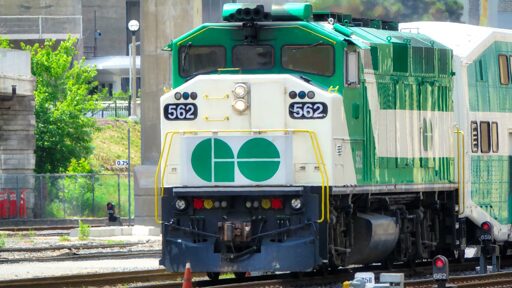
The maintenance nightmare is the main problem on any long track. Electric trains are fine within a municipality because it is short distances and frequent stops. For a Go train that goes from Barrie to Toronto traditional rail is the only thing that makes sense. We are running out of diesel globally, our total fossil liquids production is on pace to be 60% lower by 2050. With every 5% reduction in oil production prices go up 50%. As you may have noticed it starting with Hormuz. Which is still being mediated by reserve releases But if Hormuz stays closed for 3-6 months we could see prices rise 200% to $3-4/lt
Do you know the distance between Barrie and Toronto? It’s about 80-100km. Hamilton to Toronto (the most populous corridor)? 60km. As far as train tracks in Canada go that’s pretty short.
Caltrain did it between San Jose and San Francisco (75km) for 2.5 billion USD which is a major capex but their operating cost for fuel and things went down were 20-25% less than initially expected, even if in absolute terms the O&M budget went up, but the service became more frequent, fast, reliable, and so the operating cost went down per trip and per rider compared to its post-COVID diesel days.
Okay bro your numbers are crazy whatever you are suggesting is not gonna happen we can’t spend billions per hundred kilometers that is totally unsustainable.
If we follow the Siberian electrification model for upgrading existing Canadian rail: Single track: about C$100 to 120 million per 100 km Double track: about C$180 to 220 million per 100 km Those are good hardware-heavy corridor numbers for wire, poles, substations, and power hookup on a reasonably straightforward existing alignment.
I agree California’s numbers are ridiculous, but that is illustrative example to say that even in an area where the capex, namely construction costs and lawsuit avoidance are crazy, it leads to lower opex per trip.
California population is the same of all of Canada combined, high speed rail can Only pay for itself with massive population using transit. Basically with our population sizes in Canada, traditional rail with electric overhang IS viable for like freight even now, but for passengers it will make sense if we exceed $3/lt at the pump, then by $5/lt at the pump most people will be using it, and it will be able to cover its costs.