how about probably never? electric trains not really viable. hydrogen maybe. but the rail should be just simple traditional rail in Canada. all those fancy rails are just a maintenance nightmare, and much more energy intensive.
Alright you convinced me if we follow their design we can do it.
On the Trans-Siberian Railway, the electricity is not in the rail itself.
✔ How it actually works
Power comes from an overhead wire (called a catenary)
The train has a pantograph on top
The pantograph presses upward and draws electricity from the wire
The steel rails are used as the return path (ground)
Fair enough using that overhead wire system apparently can scale economically to thousands of kilometers and already has in Siberia. If we follow that model for upgrading existing Canadian rail:
Single track: about C$100 to 120 million per 100 km
Double track: about C$180 to 220 million per 100 km
Those are good hardware-heavy corridor numbers for wire, poles, substations, and power hookup on a reasonably straightforward existing alignment.
What fancy rails? It’s one overhang wire and power to the standard rail. This has been done in way less wealthy places than Canada, because it’s simple and cheap.
Catenary is a bit more involved than that. There are two overhead cables, one hanging from another, with tight tolerances to allow the pantograph to work correctly. Those catenary systems done on the cheap tend to fail in slightly windy weather.
Yeah, you’re right but I’m pretty sure you’re not disagreeing with the overall statement. Especially in this context we’re talking about commuter rail that has trains running frequent as 15 minutes on relatively short distances with frequent stops. We’re currently burning diesel and brake pads for that.
Yes overall but there are caveats. It also depends on electricity costs. At the moment in Britain electricity is expensive so electric freight locomotives have been put in storage in favour of cheaper diesels. 15min isn’t very frequent but EMUs are best for acceleration.
Just checked some nums, it seems like Canadian electricity is 2-4x cheaper than UK’s. Also in Ontario where this article is about, only about 16% of the electricity is produced by fossil fuels. The rest is nuclear, hydro and renewables.
Power to the standard rail is massive infrastructure. We need rail between all municipalities basically. Oil is going away. At 3-5$ a litre it will be too expensive for people to commute to work. And we will need rail lines between all municipalities in Canada as traditional rail is the most energy efficient transportation system we have ever developed.
Diesel engines are way tougher to maintain generally needs to be by specialized heavy diesel mechanics. They also need more frequent overhaul over the service life. For regional passenger moves and short haul, battery trains are more viable than hydrogen in the medium to long term. Hydrogen requires specialized containment and a lot of specialized infrastructure. For long haul freight (> 100km), hydrogen could be viable possibly, but electricity is still much lower opex that would offset the higher capex.
The maintenance nightmare is the main problem on any long track. Electric trains are fine within a municipality because it is short distances and frequent stops. For a Go train that goes from Barrie to Toronto traditional rail is the only thing that makes sense. We are running out of diesel globally, our total fossil liquids production is on pace to be 60% lower by 2050. With every 5% reduction in oil production prices go up 50%. As you may have noticed it starting with Hormuz. Which is still being mediated by reserve releases
But if Hormuz stays closed for 3-6 months we could see prices rise 200% to $3-4/lt
Do you know the distance between Barrie and Toronto? It’s about 80-100km. Hamilton to Toronto (the most populous corridor)? 60km. As far as train tracks in Canada go that’s pretty short.
Caltrain did it between San Jose and San Francisco (75km) for 2.5 billion USD which is a major capex but their operating cost for fuel and things went down were 20-25% less than initially expected, even if in absolute terms the O&M budget went up, but the service became more frequent, fast, reliable, and so the operating cost went down per trip and per rider compared to its post-COVID diesel days.
Okay bro your numbers are crazy whatever you are suggesting is not gonna happen we can’t spend billions per hundred kilometers that is totally unsustainable.
If we follow the Siberian electrification model
for upgrading existing Canadian rail:
Single track: about C$100 to 120 million per 100 km
Double track: about C$180 to 220 million per 100 km
Those are good hardware-heavy corridor numbers for wire, poles, substations, and power hookup on a reasonably straightforward existing alignment.
I agree California’s numbers are ridiculous, but that is illustrative example to say that even in an area where the capex, namely construction costs and lawsuit avoidance are crazy, it leads to lower opex per trip.
California population is the same of all of Canada combined, high speed rail can Only pay for itself with massive population using transit. Basically with our population sizes in Canada, traditional rail with electric overhang IS viable for like freight even now, but for passengers it will make sense if we exceed $3/lt at the pump, then by $5/lt at the pump most people will be using it, and it will be able to cover its costs.
I hear you, if we follow the Siberian model we can do it. Just not like maglev or light rail or any of the other super expensive implementations.
With Siberian style we can get for upgrading existing Canadian rail:
Single track: about C$100 to 120 million per 100 km
Double track: about C$180 to 220 million per 100 km
Those are good hardware-heavy corridor numbers for wire, poles, substations, and power hookup on a reasonably straightforward existing alignment.


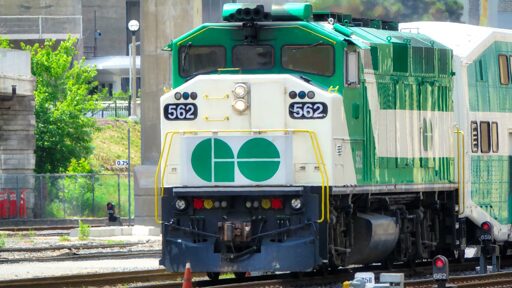
how about probably never? electric trains not really viable. hydrogen maybe. but the rail should be just simple traditional rail in Canada. all those fancy rails are just a maintenance nightmare, and much more energy intensive.
You’re trolling as Europe, China and Japan are covered in electrified lines. They work phenomenally.
Hydrogen trains are just a scam meant to keep fossil fuels in use longer.
They’re actually cheaper to service. You’re just making up that last part.
Siberia has an electric railway and it’s doing fine.
Alright you convinced me if we follow their design we can do it.
On the Trans-Siberian Railway, the electricity is not in the rail itself. ✔ How it actually works Power comes from an overhead wire (called a catenary) The train has a pantograph on top The pantograph presses upward and draws electricity from the wire The steel rails are used as the return path (ground)
You know what I mean by electrified rails of course it’s connected overhead.
Okay yeah if we do it Siberian style that is proven method so should be fine for Canada, which is much smaller and warmer country.
Yeah, like Toronto streetcars and the old buses.
Fair enough using that overhead wire system apparently can scale economically to thousands of kilometers and already has in Siberia. If we follow that model for upgrading existing Canadian rail: Single track: about C$100 to 120 million per 100 km Double track: about C$180 to 220 million per 100 km Those are good hardware-heavy corridor numbers for wire, poles, substations, and power hookup on a reasonably straightforward existing alignment.
What fancy rails? It’s one overhang wire and power to the standard rail. This has been done in way less wealthy places than Canada, because it’s simple and cheap.
Catenary is a bit more involved than that. There are two overhead cables, one hanging from another, with tight tolerances to allow the pantograph to work correctly. Those catenary systems done on the cheap tend to fail in slightly windy weather.
Yeah, you’re right but I’m pretty sure you’re not disagreeing with the overall statement. Especially in this context we’re talking about commuter rail that has trains running frequent as 15 minutes on relatively short distances with frequent stops. We’re currently burning diesel and brake pads for that.
Yes overall but there are caveats. It also depends on electricity costs. At the moment in Britain electricity is expensive so electric freight locomotives have been put in storage in favour of cheaper diesels. 15min isn’t very frequent but EMUs are best for acceleration.
Just checked some nums, it seems like Canadian electricity is 2-4x cheaper than UK’s. Also in Ontario where this article is about, only about 16% of the electricity is produced by fossil fuels. The rest is nuclear, hydro and renewables.
Power to the standard rail is massive infrastructure. We need rail between all municipalities basically. Oil is going away. At 3-5$ a litre it will be too expensive for people to commute to work. And we will need rail lines between all municipalities in Canada as traditional rail is the most energy efficient transportation system we have ever developed.
Diesel engines are way tougher to maintain generally needs to be by specialized heavy diesel mechanics. They also need more frequent overhaul over the service life. For regional passenger moves and short haul, battery trains are more viable than hydrogen in the medium to long term. Hydrogen requires specialized containment and a lot of specialized infrastructure. For long haul freight (> 100km), hydrogen could be viable possibly, but electricity is still much lower opex that would offset the higher capex.
The maintenance nightmare is the main problem on any long track. Electric trains are fine within a municipality because it is short distances and frequent stops. For a Go train that goes from Barrie to Toronto traditional rail is the only thing that makes sense. We are running out of diesel globally, our total fossil liquids production is on pace to be 60% lower by 2050. With every 5% reduction in oil production prices go up 50%. As you may have noticed it starting with Hormuz. Which is still being mediated by reserve releases But if Hormuz stays closed for 3-6 months we could see prices rise 200% to $3-4/lt
Do you know the distance between Barrie and Toronto? It’s about 80-100km. Hamilton to Toronto (the most populous corridor)? 60km. As far as train tracks in Canada go that’s pretty short.
Caltrain did it between San Jose and San Francisco (75km) for 2.5 billion USD which is a major capex but their operating cost for fuel and things went down were 20-25% less than initially expected, even if in absolute terms the O&M budget went up, but the service became more frequent, fast, reliable, and so the operating cost went down per trip and per rider compared to its post-COVID diesel days.
Okay bro your numbers are crazy whatever you are suggesting is not gonna happen we can’t spend billions per hundred kilometers that is totally unsustainable.
If we follow the Siberian electrification model for upgrading existing Canadian rail: Single track: about C$100 to 120 million per 100 km Double track: about C$180 to 220 million per 100 km Those are good hardware-heavy corridor numbers for wire, poles, substations, and power hookup on a reasonably straightforward existing alignment.
I agree California’s numbers are ridiculous, but that is illustrative example to say that even in an area where the capex, namely construction costs and lawsuit avoidance are crazy, it leads to lower opex per trip.
California population is the same of all of Canada combined, high speed rail can Only pay for itself with massive population using transit. Basically with our population sizes in Canada, traditional rail with electric overhang IS viable for like freight even now, but for passengers it will make sense if we exceed $3/lt at the pump, then by $5/lt at the pump most people will be using it, and it will be able to cover its costs.
Most of the world uses electric trains. Rent a passport.
I hear you, if we follow the Siberian model we can do it. Just not like maglev or light rail or any of the other super expensive implementations.
With Siberian style we can get for upgrading existing Canadian rail: Single track: about C$100 to 120 million per 100 km Double track: about C$180 to 220 million per 100 km Those are good hardware-heavy corridor numbers for wire, poles, substations, and power hookup on a reasonably straightforward existing alignment.